Beyond the Click: Winning Brand Discovery with a Total Search Strategy
A New Revolution in a Historic City
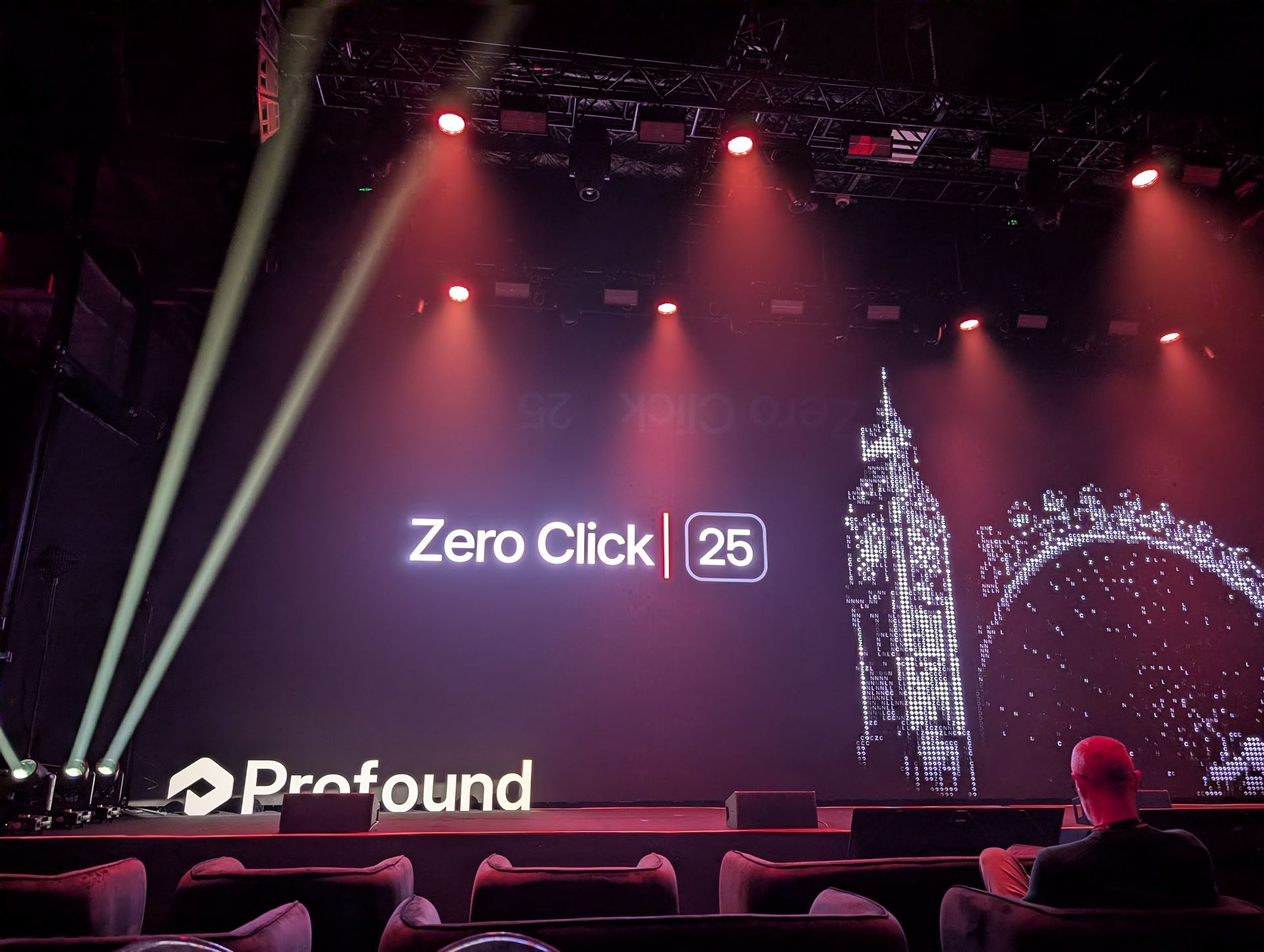
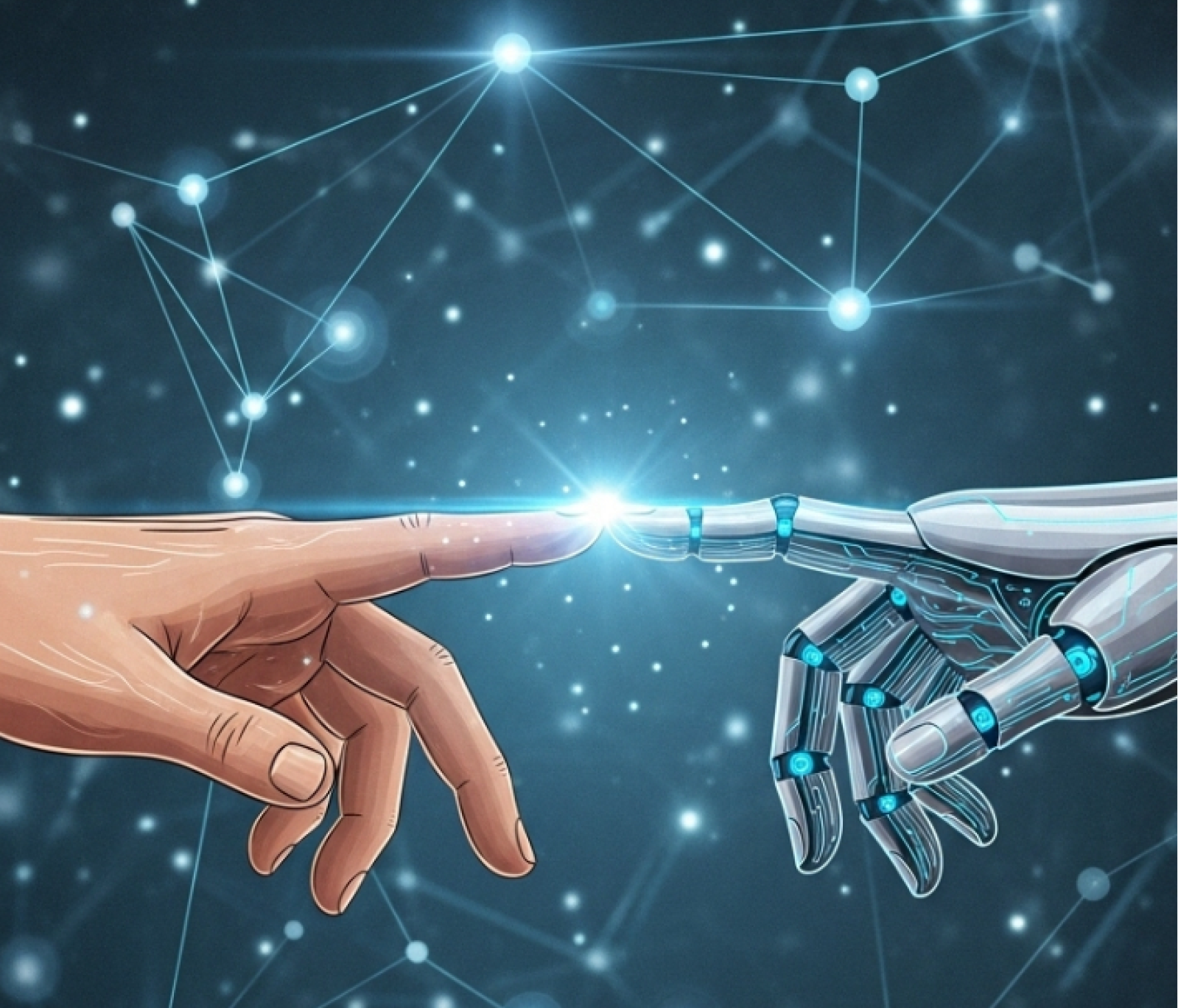
Just a couple of weeks ago, on a crisp February morning, I had the privilege of taking the stage at MAD//North 2026 in Manchester. Stepping into the iconic Aviva Studios, you could feel the buzz of an industry in flux. It felt fitting to be discussing the future in a city so rich with the spirit of innovation. Just a stone's throw away, the Manchester Science Museum houses a replica of 'Baby', the world's first stored-program computer, built right there. That machine was a testament to Manchester's pioneering role in the last Industrial Revolution. Today, I believe we are not just witnessing, but actively living through a new one: Industry 4.0, powered by the relentless advancements in Artificial Intelligence.
Our panel was titled "Zero-Click World: Is 'Total Search' the Key to Your Brand's Discovery?" Alongside the brilliant Sarah Salter from WPP and Ellie Connor from Danone, we dove into the profound shifts reshaping our industry. This article is my reflection on that conversation, and of the key take-outs and a call to action for every marketer navigating this new terrain. The central thesis is clear, the old maps won't work, and brands urgently need a "Total Search" strategy to survive and thrive.
Part 1: The AI-Powered Industrial Revolution: Navigating the Zero-Click World
My opening remarks on stage were intended to be a wake-up call.
"AI is not just tweaking the rulebook for marketers; it's tearing it up and writing a brand new one. It is fundamentally reshaping how we search, how we discover, and how we connect with brands. We are rapidly moving away from a world where search engines are simple middlemen and hurtling towards a "zero-click reality."
In this new landscape, AI-powered platforms, from Google's AI Overviews to Gemini and ChatGPT, are becoming our personal navigators and decision-makers, anticipating our every need. The very act of 'discovery' has splintered. What was once a relatively linear journey starting with a keyword is now a fragmented, overlapping experience that spans traditional search engines, social media feeds, video platforms, and generative AI conversations.
This isn't just a minor shift; it's an evolution of attention itself. For brands, this presents both an immense challenge and an unparalleled opportunity. The challenge lies in managing a chaotic and fragmented ecosystem. The opportunity lies in the potential to forge deeper, more meaningful connections with audiences by being present in the moments that truly matter. This new reality forces a critical question upon us, the one that formed the core of our panel discussion: Is a Total Search Strategy the key to the future of brand discoverability? As we unpacked over the session, the answer is an unequivocal yes.
Part 2: Redefining Discoverability: From Keywords to Capabilities & AI Optimisation
The first question we tackled was foundational: what does "discoverability" even mean in 2026? As Ellie from Danone put it, they've pivoted to thinking about "discoverability" not because search is dead, but because search is everywhere.
Discoverability Beyond Keywords: Our discussion quickly established that discoverability is no longer about a narrow focus on keywords. It's about ensuring your brand is visible in all the places your consumer is searching, whatever, wherever, and however they look for answers. The emphasis has decisively shifted from matching keywords to understanding audience behaviours, intents, and mindsets. It's about targeting a user behaviour, not just a channel.
AI Overviews (AIOs) as the New Default: AIOs are now prevalent in a majority of search results, accelerating the trend of "zero-click" interactions. Your answer might be surfaced directly in the SERP, meaning the user never has to visit your website. To be the source of truth in these moments, content strategy must evolve. This means a relentless focus on established authoritativeness signals like Experience, Expertise, Authoritativeness, and Trustworthiness (E-E-A-T). As Sarah noted, E-E-A-T is no longer just an SEO tactic; it's table stakes for being cited by an LLM. Practically, this means structuring content to directly answer questions, using schema markup to help machines parse your authority, and leveraging real, credentialed authors and experts to validate your content.
AI-Native Search (Gemini, ChatGPT): While the hype cycle around platforms like ChatGPT is maturing, their directional growth is undeniable. These platforms present a "grounding data problem"—they largely reflect their training data rather than real-time information. This is where Digital PR becomes a powerful LLM influence tactic. Getting your brand cited in high-authority publications isn't just for human eyeballs anymore; it's about feeding the machine and ensuring you're part of the data set that informs AI-generated answers. This also brings the "content access debate" to the forefront. As publishers block LLMs from their content, brands must make a strategic choice: protect short-term traffic or ensure long-term visibility within these growing AI ecosystems.
My Takeaway: The changes demand a truly holistic platform strategy. We can no longer treat platforms as disconnected silos. A "Total Search" approach means building relevance across the full ecosystem, with content and capabilities designed to show up natively, whether in a Google AIO, a TikTok video, or a Gemini summary.
Part 3: Measuring Influence & The Rise of the Machine Customer
If discoverability has changed, then how we measure it must also be revolutionised. In a zero-click, multi-platform world, traditional last-click attribution models are not just outdated; they are actively misleading. They flatter paid search and punish the long-term brand building that drives success in this new era.
Focus on Influence & Outcomes: As a panel, we agreed that measurement must pivot from quantifying raw traffic to quantifying brand influence, sentiment, and the desired consumer actions. A brand mention in an AI summary that shapes a purchasing decision is immensely valuable, even if it never results in a click.
New Metrics for the AI Era: This requires a new suite of KPIs. We need to be tracking our "Share of AIO" (how often we appear in AI Overviews for relevant queries), our AI citation rates, referral traffic from LLMs, and brand sentiment within AI-generated outputs. The high level of personalisation in AI also means there's no universal "rank 1" to chase. Instead, we must monitor ranges of outputs and prioritise brand health as the ultimate measure of discoverability.
The "Machine Customer Era": Perhaps the most profound shift is the dawn of agentic commerce. This is the "shop front to stock room" change. The "Machine Customer Era," where AI agents make purchasing decisions on behalf of consumers, is already here. Brands must now prepare to market not only to humans but also to machines.
Structured Data is King: To influence these AI agents, structured data is paramount. Comprehensive, well-structured product feeds and machine-readable content are what allow an agent to understand, compare, and recommend your products effectively. This means websites must cater to a dual audience: humans, with compelling UX and emotional storytelling, and AI agents, with clean structured data and technical compatibility.
Brand Equity Influences AI: Crucially, brand still matters. In fact, it matters more than ever. Strong brand associations and established preferences, built over time, become encoded into an AI's personalisation layer. A consumer who already trusts Danone for nutrition will have that preference reflected by their AI agent. As Sarah powerfully stated, "The brands that win in an agentic world are the ones that have already won in the human one." Without strong brand equity, you risk being commoditised by an agent defaulting to price or generic features.
My Takeaway: Our measurement frameworks must evolve to capture the true value of influence in a zero-click world. Success is no longer about how many people arrive at your site, but about whether your brand is found, trusted, and chosen across the moments that matter. And our marketing must now be a two-pronged effort: winning the hearts of consumers and convincing the minds of robots.
Part 4: The Future is Now: Predictions and the Call for Proactive Action
The final part of our discussion turned to the future. What will the next year hold?
Evolving Search Landscape: We predict that while Google will remain a dominant force, its absolute market share may soften as AI-powered experiences from other tech giants (like Apple) integrate deeper into our lives. AI Overviews will become the default for many queries, and the rise of social and video search will continue to accelerate, with platforms like YouTube becoming primary discovery engines.
Brand Investment Renaissance: As AI commoditises performance marketing and activation, brand investment will see a much-needed renaissance. In a world where an AI can find the cheapest or fastest option in a second, brand equity becomes the most critical and defensible differentiator.
My Closing Message: I ended my time on stage with an urgent call to action, and I want to end this article with the same. The speed of AI-driven change is staggering. If you are only just starting to plan for brand discovery in this new world of AI Search, you are probably already too late.
This is not a time for deliberation; it is a time for adaptation. We need to be looking at a watch, not a calendar. The landscape requires continuous, proactive planning and a willingness to embrace change. The future of search isn't years away; it's unfolding right now, with every new query and every AI-generated answer. The time to act is now.